What Is the Best IP Telephone System from China?
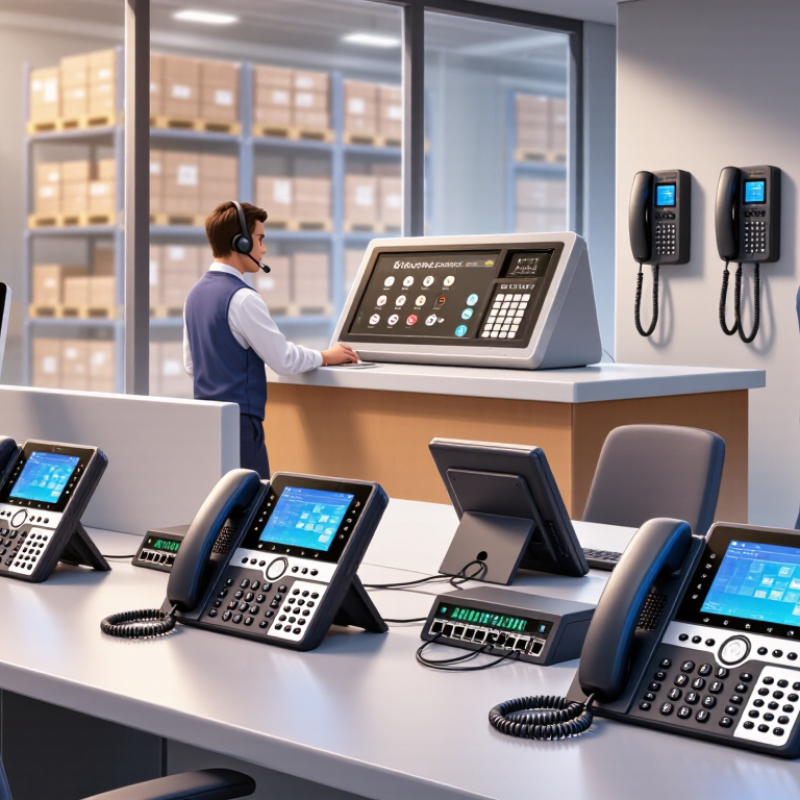
Choosing the best ip telephone system from China requires more than comparing prices and handset designs. A reliable decision begins with daily communication needs, network conditions, and long-term support. A busy warehouse needs durable phones, clear audio, and simple provisioning. A hotel may need reception consoles, paging functions, and many extensions. Small offices often value cloud management and lower maintenance costs.
VoIP pioneer Jeff Pulver once said, “The future of voice is not in the phone; it is in the network.” That idea remains useful when evaluating an ip telephone system. The handset matters, but SIP compatibility, codec support, PoE stability, and network performance matter more. Buyers should test call clarity during busy periods. They should also check echo control, firmware updates, encryption options, and compatibility with existing PBX platforms.
Chinese manufacturers offer a wide range of systems, from affordable desk phones to complete enterprise solutions. Some provide strong hardware at competitive prices. Others may have weaker documentation or slower international support. That difference can become painful after installation. A careful review should examine warranty terms, spare parts, remote assistance, certification records, and reseller experience.
There is no universal winner. My own view may be overly cautious, but a low purchase price can hide integration costs. A short pilot deployment is wiser than a large first order. Test ten phones, one gateway, and real office traffic. Then measure reliability, management effort, and user feedback. This practical evidence creates a more trustworthy basis for selecting the best ip telephone system from China.
What Defines a High-Quality IP Telephone System from China?
A high-quality IP telephone system from China should deliver more than a low purchase price. It needs stable voice quality, open standards, strong security, and reliable local support. ITU-T G.114 recommends keeping one-way voice delay below 150 milliseconds for natural conversation. The system should also control jitter, packet loss, and echo during busy office hours. In practical testing, measure Mean Opinion Score, call recovery, and performance across different network conditions. A product that sounds clear in a showroom may struggle in a crowded warehouse.
Interoperability matters just as much. Support for SIP, TLS, SRTP, IPv6, and standard provisioning reduces integration risks. PoE compatibility can simplify installation and reduce cable clutter. Grand View Research valued the global VoIP services market at about 140.8 billion dollars in 2023. It expects a 10.2% compound annual growth rate from 2024 to 2030. This growth increases demand for scalable systems, but market growth does not guarantee quality. Some specifications still look impressive while firmware updates remain unclear. That deserves careful questioning.
Tips: Request a live demonstration with background noise and weak network conditions. Ask for security update timelines, warranty procedures, and spare-part availability. Check whether the supplier provides test reports, conformity documents, and English technical support. Record ten-minute calls at different times. Review the results with your network engineer, not only the sales team. A small pilot often reveals inconvenient problems early.
What Is the Best IP Telephone System from China? - What Defines a High-Quality IP Telephone System from China?
A practical evaluation framework based on interoperability, voice quality, security, reliability, manageability, and total cost of ownership.
| Evaluation Dimension | Recommended Benchmark | Why It Matters | How to Verify It | Priority |
|---|---|---|---|---|
| SIP Compatibility | SIP over UDP, TCP, and TLS; support for standard SIP registration, calling, transfer, hold, forwarding, and conferencing features. | Broad SIP compatibility allows the telephone system to operate with different IP-PBX platforms, hosted voice services, and session border controllers. | Conduct registration, inbound-call, outbound-call, transfer, hold, and conference tests with the intended SIP platform. | High |
| Voice Quality | Support for G.711, G.722 wideband audio, and low-bandwidth codecs such as G.729 or Opus where applicable; packet-loss concealment and adaptive jitter buffering. | Codec flexibility and effective media handling help maintain clear conversations across office networks, VPNs, and internet connections. | Measure Mean Opinion Score results, packet loss, latency, and jitter during normal and congested network conditions. | High |
| Network Connectivity | At least one 10/100/1000 Mbps Ethernet port; dual-port models should support PC pass-through and VLAN tagging. | Gigabit connectivity reduces bottlenecks, while VLAN support helps separate voice traffic from ordinary data traffic. | Check port speed, VLAN configuration, DHCP options, QoS tagging, and compatibility with the network switch. | High |
| Power over Ethernet | IEEE 802.3af PoE for standard desk phones; IEEE 802.3at PoE+ may be useful for phones with color displays, expansion modules, or video functions. | PoE simplifies installation and allows centralized power backup through network infrastructure. | Confirm the phone's power class and test startup, calling, and maximum-feature operation using the target PoE switch. | High |
| Security | TLS for signaling, SRTP for media, HTTPS for administration, role-based access, strong password policies, and signed firmware where available. | Voice systems can expose sensitive business communications and administrative credentials if signaling, media, or management traffic is left unprotected. | Review encryption settings, certificate management, default-account behavior, firmware-signing practices, and security-update procedures. | High |
| Provisioning and Deployment | Automatic provisioning through HTTPS, secure TFTP, or vendor-neutral configuration methods; support for DHCP-based provisioning options. | Automated deployment reduces configuration time and minimizes errors when installing dozens or thousands of phones. | Provision a test group remotely, apply configuration templates, update credentials, and verify recovery after a factory reset. | High |
| Device Management | Web administration, centralized configuration, firmware management, remote diagnostics, configuration backup, and event logging. | Centralized management lowers operating costs and makes it easier to troubleshoot device, network, and account problems. | Test bulk configuration, remote reboot, firmware deployment, log export, and administrator permission controls. | High |
| Reliability | Stable operation under continuous daily use, flash-memory protection, watchdog recovery, and a documented firmware maintenance process. | Reliable phones reduce downtime, help maintain service continuity, and lower replacement and support costs. | Review production test procedures, failure-rate data, long-duration call tests, environmental specifications, and firmware release history. | High |
| Interoperability | Compatibility with open SIP environments, common IP-PBX functions, LDAP directories, headsets, EHS adapters, and standard network equipment. | Interoperability protects the buyer from being locked into one communications platform or accessory ecosystem. | Use a real-world pilot with the intended PBX, directory service, headset, call-flow rules, and network security policies. | High |
| User Interface | Clear display, dedicated call-control keys, adjustable ringtone and volume, programmable line keys, and multilingual menu support where required. | An intuitive interface improves employee adoption and reduces training and support requests. | Ask representative users to complete common tasks such as dialing, transferring, parking, conferencing, and changing presence status. | Medium |
| Acoustic Performance | Full-duplex speakerphone, echo cancellation, background-noise reduction, adjustable handset volume, and support for compatible wideband headsets. | Acoustic performance directly affects meeting quality, productivity, and user satisfaction in open offices and noisy environments. | Test handset, speakerphone, and headset modes in quiet and noisy locations with multiple users. | High |
| Regional and Regulatory Compliance | Required electrical safety, electromagnetic compatibility, radio, and environmental documentation for the destination market. | Compliance documentation supports legal importation, enterprise procurement, insurance requirements, and safe operation. | Request applicable declarations, laboratory reports, product labels, user manuals, and destination-market certification records. | High |
| Warranty and Technical Support | Clearly defined warranty terms, documented response times, firmware support, spare-parts availability, and English-language technical documentation. | After-sales support is especially important for geographically distributed deployments and business-critical voice services. | Review the service-level agreement, support channels, escalation process, replacement policy, and firmware-support period before purchase. | High |
| Total Cost of Ownership | Evaluate purchase price together with licensing, accessories, PoE requirements, shipping, support, replacement, energy use, and deployment labor. | A low purchase price does not always produce the lowest long-term cost if management, support, or compatibility expenses are high. | Calculate three- to five-year costs using the expected number of users, replacement rate, support model, and network requirements. | High |
| Supply Chain and Customization | Stable production capacity, traceable component sourcing, consistent hardware revisions, private-label or configuration options, and quality-control records. | Consistent supply and controlled product revisions are important for large deployments and long-term device management. | Request sample-unit inspection, production test records, bill-of-material change procedures, lead-time estimates, and batch consistency evidence. | Medium |
| Overall selection rule: The best IP telephone system from China is not necessarily the least expensive model. It should provide verified SIP interoperability, strong voice quality, secure communications, reliable provisioning, appropriate regulatory documentation, dependable after-sales support, and a competitive total cost of ownership for the intended deployment. | ||||
Related Posts
-
Unlocking Cost-Effective Communication: The Future of Business with VoIP Systems
-

Why Is Voice Over Phone Important for Global Buyers?
-

2026 Top VoIP Phone Line Providers for Global Buyers?
-
Exploring the Future of Video Intercom Systems at the 138th China Import and Export Fair 2025
-

Top 10 Types of Apartment Intercom Systems for Buyers?
-

Top Strategies for Maximizing Efficiency with Voice Over IP Phone Solutions