How to Choose the Best Miniature Circuit Breaker Tips Inside?
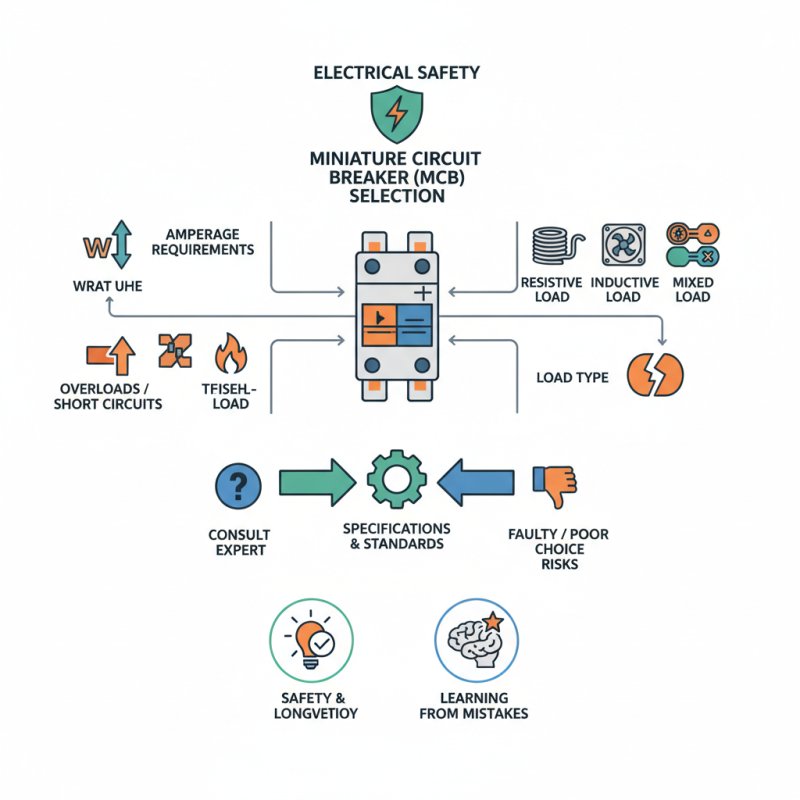
Choosing the right Miniature Circuit Breaker (MCB) can be crucial for electrical safety. A suitable MCB protects circuits from overloads and short circuits. Many people overlook this vital component. Each MCB serves a specific purpose and features varying ratings. Selecting the wrong one may lead to failures or risks.
Consider your specific needs before making a purchase. Analyze the amperage requirements for your circuits. If you underestimate this, the MCB may trip frequently or worse. Pay attention to the type of load: resistive, inductive, or mixed. Different loads require different MCB types.
Faulty or poorly chosen MCBs can cause problems. It's essential to understand the specifications and standards. Don't hesitate to consult with an expert if you feel uncertain. The right Miniature Circuit Breaker can ensure safety and longevity for your electrical systems. However, remember that no choice is entirely foolproof. Learning from mistakes can often lead to better decisions.
Understanding the Function of Miniature Circuit Breakers
Miniature circuit breakers (MCBs) are essential safety devices. They protect electrical circuits from overloads and short circuits. Understanding their function is key to choosing the right one for your needs. MCBs automatically switch off power when they detect a fault. This prevents potential damage to wiring and appliances.
When selecting an MCB, consider its rated current. This is the maximum load the breaker can handle without tripping. If you choose one that is too low, it may trip frequently. On the other hand, a breaker rated too high may not protect your equipment effectively.
You should also pay attention to the breaking capacity. This is the maximum fault current the device can safely interrupt. A higher breaking capacity offers more protection. However, it can also come with a higher price. Assessing your specific requirements is crucial before making a decision. You might find that your initial choice doesn’t fit your overall setup. This can be frustrating, but it is part of the learning process.
Key Factors to Consider When Selecting a Miniature Circuit Breaker
When selecting a miniature circuit breaker (MCB), several key factors must be considered. The current rating is crucial. It determines how much electrical load the MCB can handle. Most reports suggest that MCBs typically range from 6A to 63A. However, it’s vital to accurately calculate the maximum load. Underestimating can lead to overheating or failure, while overrating might cause nuisance tripping.
Another significant aspect is the breaking capacity. This refers to the maximum fault current the MCB can safely interrupt. According to industry analyses, common breaking capacities range from 3kA to 10kA. Choosing an MCB with an adequate breaking capacity prevents catastrophic failures during short circuits. This aspect often gets overlooked, leading consumers to purchase equipment unfit for their specific application.
Lastly, environmental conditions can’t be ignored. Humidity, temperature, and exposure to dust influence MCB performance. An MCB installed in a humid area may corrode faster, reducing lifespan. A clearer understanding of installation settings is often lacking. Research shows that proper installation location increases reliability by up to 30%. Therefore, careful evaluation of factors like load, breaking capacity, and environment is essential. Skipping these steps can lead to regrettable oversights in the safety of electrical systems.
Types of Miniature Circuit Breakers and Their Applications
Miniature Circuit Breakers (MCBs) are essential for electrical safety. They automatically cut off the circuit during overloads or short circuits. Different types of MCBs serve various applications, and understanding these can ensure optimal safety and performance.
One common type is the B curve MCB. It is ideal for residential lighting and general-purpose circuits. The B curve trips at 3 to 5 times the rated current. For appliances with high inrush currents, like motors, the C curve MCB is better suited. It trips at 5 to 10 times the rated current. This flexibility is crucial in preventing nuisance tripping while safeguarding appliances.
Moreover, the D curve MCB handles heavy electrical loads. It is useful in industrial settings where high inrush currents are typical. According to recent industry studies, nearly 20% of electrical failures can be traced back to inadequate circuit protection. Recognizing the right type of MCB can significantly mitigate risks. However, improper selection or installation can still lead to failures. It’s vital to assess the specific needs of each application for proper safety measures.
Miniature Circuit Breaker Types and Their Applications
How to Determine the Right Size and Rating for Your Needs
Choosing the correct size and rating for a miniature circuit breaker (MCB) is crucial for electrical safety. Understanding your electrical load is the first step. According to industry standards, the total amperage of devices should not exceed 80% of the MCB's rating. For instance, if you have a 20A breaker, your devices should ideally draw no more than 16A. This creates a buffer to prevent tripping during surge loads.
Next, consider the type of load. Resistive loads, like heaters, may need a different breaker than inductive loads, such as motors. Reports suggest that inductive loads can cause higher inrush currents. This means you may need a breaker with a higher rating for motors. A common pitfall is underestimating the starting current, which could lead to frequent breaker trips.
It’s also vital to assess the environment where the MCB will be installed. Temperature variations affect performance. For example, a breaker rated for 25A may only allow 20A in high-temperature conditions. Ignoring this can lead to inadequate protection. Always evaluate your specific needs and consider potential future expansions in load demands. Consult with professionals, but ensure to do your own research too.
How to Choose the Best Miniature Circuit Breaker Tips Inside? - How to Determine the Right Size and Rating for Your Needs
| Voltage Rating (V) | Current Rating (A) | Breaking Capacity (kA) | Pole Configuration | Application |
| 230 | 16 | 6 | Single Pole | Residential |
| 400 | 25 | 10 | Three Pole | Commercial |
| 230 | 32 | 6 | Double Pole | Industrial |
| 400 | 63 | 15 | Four Pole | High Voltage Systems |
Installation Tips and Best Practices for Circuit Breakers
When installing a miniature circuit breaker (MCB), attention to detail is crucial. Start by understanding your electrical load requirements. This helps you select the correct amperage rating for the MCB. Ensure you turn off the power before beginning. It sounds simple, but many overlook this step, leading to hazards.
Wiring matters too. Use high-quality wires that match the load. Improper insulation can cause overheating. When connecting the MCB, follow the manufacturer's guidelines meticulously. Misconnections can result in circuit failures. Also, check for tight connections regularly. Loose wires can lead to arcing, which is dangerous.
Finally, always test your installation after completion. A simple test can save you from future headaches. Remember, a well-installed MCB can protect your home effectively. However, be mindful that mistakes happen. Reflect on your process and learn from any errors encountered. Continuous improvement in your installation skills will lead to greater safety and reliability.