Sourcing Interactive Sport Games in 2026 requires more than comparing graphics, features, and license fees. Buyers must examine how each game performs in real environments, from a school gym to a hotel activity room. A polished demo can hide unstable motion tracking, delayed feedback, or difficult setup. Test the complete player journey before making a purchasing decision.
Jesse Schell, game designer and author of The Art of Game Design, wrote, “A game is a problem-solving activity, approached with a playful attitude.” This idea remains valuable when evaluating InterActive Sport Games. The strongest products turn movement into clear challenges, immediate feedback, and repeatable fun. However, enjoyment alone cannot determine quality. Procurement teams should review sensor accuracy, multiplayer stability, accessibility options, age suitability, privacy controls, and technical support. They should also request live demonstrations with ordinary users, not only trained staff.
Small details reveal practical value. Can players understand the instructions within thirty seconds? Does the system respond when lighting changes? Can an operator replace a damaged controller without specialist tools? These questions matter more than impressive promotional footage. Yet no sourcing checklist is perfect. A product may perform well during testing and disappoint after six months of heavy use. That uncertainty deserves attention. Buyers should compare warranties, software updates, training materials, and service response times. Careful sourcing is not about choosing the most exciting game. It is about selecting an engaging, reliable, and responsible experience that can keep working when real players take control.
To source an interactive sport game in 2026, define the user and setting before comparing suppliers. The 2024 Global Games Market Report estimates 3.42 billion players worldwide and $187.7 billion in game revenue. That scale hides major differences between a child learning basic movement, a fan replaying a penalty, and an athlete testing reaction speed. Write each use case in one sentence. For example: “A visitor completes a three-minute basketball challenge using motion controls in a noisy venue.” Add device type, player age, session length, skill level, accessibility needs, language, internet conditions, and supervision requirements. Be specific about success: completion rate, repeat play, reaction time, learning improvement, or safe movement.
Your sourcing brief should also describe the physical details. Specify floor area, display distance, lighting, sound limits, controller durability, setup time, maintenance access, and data handling. The 2024 Global Entertainment and Media Outlook projects games and esports revenue to grow from about $227 billion in 2023 to $321 billion by 2028. Demand is expanding, but purchasing the wrong experience remains expensive. I have seen briefs overvalue graphics and undervalue queue flow. That is a mistake. Test a rough prototype with real users, including less confident players. Measure where they hesitate. Ask why. A polished game can still fail when instructions appear too late, motion tracking loses a player, or a three-minute session feels exhausting._requirements should leave room for revision, because the first assumption is often wrong.
Map the 2026 interactive sports game market by segment, audience, and platform. Newzoo’s Global Games Market Report 2024 estimates 3.42 billion players worldwide and $187.7 billion in annual game revenue. Sports titles compete inside this larger ecosystem, not separately from it. Mobile offers broad reach and short sessions. Consoles support premium simulation and deeper control systems. Personal computers often attract modding, competitive play, and flexible hardware users.
Regional demand needs closer attention. Newzoo identifies Asia-Pacific as the largest games region by revenue, while North America and Europe remain important for premium spending. PwC’s Global Entertainment and Media Outlook 2024–2028 projects global video game and esports revenue to rise from about $227 billion in 2023 to over $300 billion in 2028. These figures support investment, but they do not guarantee success for every sports concept. Local payment habits, sports culture, age ratings, and network quality can change sourcing decisions quickly.
Evaluate each candidate through retention, licensing clarity, accessibility, and live-service capacity. Check whether a five-minute match remains enjoyable on a small screen. Test latency in real markets. Ask for cohort data, not only download totals. That distinction matters. A game with strong first-week traffic may lose players after one update. I would also examine moderation plans and update costs, because these areas are often underestimated during procurement. The market map remains imperfect, especially where reports combine sports, esports, and broader game revenues.
How to Source Interactive Sport Games in 2026?
Sourcing an interactive sport game starts with the development team. Review its released work, prototype quality, and experience with real-time interaction. Ask how the team handles delays, crashes, accessibility, and content updates. A polished demo is useful, but it can hide production weaknesses. Request a playable build with ordinary devices and unstable network conditions. Check whether testing includes different ages, abilities, screen sizes, and connection speeds. That detail matters.
The platform should match your audience, budget, and distribution plan. Compare browser, mobile, desktop, and connected-screen support before signing an agreement. Examine loading time, account systems, analytics, payment controls, and content moderation tools. Confirm who owns player data and how it can be exported. Technology providers also need careful review. Measure server response time, software development kit quality, documentation, security controls, and service availability. Ask for clear incident procedures, not vague promises. No scorecard is perfect. Some risks appear only after launch.
Tips: Use a weighted evaluation sheet. Give developers, platforms, and technology providers separate scores. Test one short game session from start to finish. Watch for input lag, unclear instructions, audio imbalance, and confusing menus. Ask for two customer references and evidence of successful updates. Check contract terms for support limits, data protection duties, and exit options. Leave space for human judgment. Numbers can mislead. A technically strong provider may still communicate poorly, while a smaller team may solve problems faster.
| Evaluation Dimension | Developer Profile | Platform Profile | Technology Provider Profile | Typical 2026 Benchmark | Priority | Verification Method |
|---|---|---|---|---|---|---|
| Core Sports Expertise | Demonstrated experience with simulation, arcade, management, or fitness gameplay. | Supports sports-oriented content distribution, user accounts, payments, analytics, and live operations. | Provides specialized components such as physics, motion capture, computer vision, networking, or identity systems. | At least 3 relevant commercial projects or 5 years of domain experience. | High | Review shipped titles, technical demonstrations, client references, and post-launch support records. |
| Target Device Coverage | Can optimize gameplay for mobile, desktop, console, web, or immersive devices. | Offers stable deployment and account synchronization across the required device mix. | Provides tested software development kits and runtime support for the target operating systems. | Support for at least 2 target device categories with documented performance limits. | High | Request device compatibility matrices and conduct tests on representative low-, mid-, and high-performance hardware. |
| Real-Time Multiplayer | Has experience with matchmaking, player synchronization, anti-cheat controls, and reconnection logic. | Supports regional server deployment, player sessions, moderation, and service monitoring. | Provides low-latency networking, authoritative server tools, and scalable session management. | Target median gameplay latency below 100 ms in priority markets; graceful recovery after short disconnects. | High | Run load tests with simulated concurrent users, packet loss, latency variation, and reconnect events. |
| Graphics and Performance | Maintains stable frame rates while supporting realistic environments, crowds, equipment, and effects. | Supports efficient content delivery, patching, caching, and asset version control. | Offers rendering, compression, streaming, or optimization tools suitable for the intended hardware. | Maintain approximately 30 frames per second on baseline devices and 60 frames per second on premium devices where required. | High | Measure frame rate, memory usage, battery consumption, loading time, and thermal behavior during peak scenes. |
| Motion and Input Technology | Integrates controllers, touch input, motion tracking, gesture recognition, or adaptive interfaces. | Supports consistent input mapping and account-level settings across devices. | Delivers motion capture, computer vision, sensor fusion, or haptic technology with documented accuracy. | Input response generally under 100 ms for competitive gameplay; motion tracking accuracy validated for the intended environment. | Medium–High | Test input latency, tracking stability, lighting tolerance, calibration time, and accessibility settings. |
| Artificial Intelligence | Uses AI for opponent behavior, coaching, personalization, animation, or automated testing. | Provides data pipelines, model monitoring, moderation workflows, and user-consent controls. | Offers inference, simulation, recommendation, or vision services with measurable accuracy and predictable costs. | AI features should have a documented quality target, human review process, and fallback behavior when confidence is low. | Medium–High | Evaluate accuracy, response time, bias, explainability, model update procedures, and operating cost per active user. |
| Scalability and Reliability | Can expand engineering, art, quality assurance, and live-operations capacity after launch. | Supports automatic scaling, observability, incident response, and service-level reporting. | Provides tested capacity limits, redundancy, disaster recovery, and regional availability options. | Target service availability of at least 99.9% for core online functions, excluding scheduled maintenance. | High | Review service-level terms, recovery objectives, capacity tests, incident history, and escalation procedures. |
| Data Protection and Security | Uses secure development practices, access controls, encryption, and vulnerability management. | Supports consent management, account security, payment protection, and data export or deletion workflows. | Provides independent security assessments, secure APIs, logging, key management, and breach notification procedures. | Encryption in transit and at rest, multifactor administrative access, regular vulnerability testing, and documented retention periods. | Critical | Conduct security questionnaires, penetration tests, privacy impact assessments, and contract reviews. |
| Regulatory Readiness | Can implement age assurance, parental controls, content ratings, and responsible monetization features. | Supports regional rules for privacy, payments, consumer protection, accessibility, and digital content. | Provides compliance documentation and configuration controls for data processing and regional hosting. | Written compliance ownership for each launch market, with documented evidence before release. | Critical | Map product features against applicable privacy, accessibility, consumer-protection, and gambling-related requirements. |
| Monetization Flexibility | Can support premium sales, subscriptions, advertising, downloadable content, or cosmetic purchases without damaging gameplay balance. | Provides payment routing, entitlement management, refunds, taxes, promotions, and revenue reporting. | Integrates billing, advertising measurement, fraud prevention, or virtual-economy services. | At least 2 monetization models available with transparent transaction, platform, and operational fees. | High | Model net revenue under conservative, expected, and high-engagement scenarios; review refund and fraud assumptions. |
| Live Operations Capability | Can deliver seasonal content, events, balance updates, bug fixes, and community management. | Supports remote configuration, experimentation, segmentation, and controlled content releases. | Provides analytics, feature flags, content delivery, monitoring, and rollback mechanisms. | Ability to release controlled updates without requiring a full client rebuild for routine configuration changes. | High | Review a sample 90-day live-operations plan, release approval workflow, rollback process, and staffing model. |
| Accessibility | Supports remappable controls, subtitles, color contrast, readable text, difficulty options, and alternative input methods. | Provides accessible account, purchase, support, and communication flows. | Offers speech, captioning, haptic, interface, and input-assistance technologies. | Accessibility requirements defined during design, with testing involving users with different access needs. | Medium–High | Use an accessibility checklist, automated scans, manual testing, and specialist user research. |
| Integration and Interoperability | Can connect gameplay systems with identity, analytics, content management, customer support, and payment services. | Offers documented APIs, webhooks, software development kits, and data export options. | Supports common data formats, versioned interfaces, authentication standards, and integration testing. | Documented APIs with versioning and test environments; no critical integration dependent on undocumented behavior. | High | Build a proof-of-concept integration and test authentication, failure handling, rate limits, and data reconciliation. |
| Commercial Model | Typically priced through milestone fees, development retainers, revenue share, or a hybrid structure. | May charge platform access, hosting, transaction, support, or usage-based fees. | Often uses licensing, subscription, per-user, per-call, seat-based, or usage-based pricing. | Five-year total cost of ownership should include development, hosting, support, upgrades, compliance, and exit costs. | High | Request a fully itemized quote with volume tiers, minimum commitments, renewal terms, and overage charges. |
| Ownership and Portability | Contract should define ownership of source code, original assets, tools, documentation, and derivative work. | Should provide data export, account portability, and migration support at contract termination. | Should specify license scope, dependency rights, source escrow where appropriate, and replacement options. | Exit plan tested before launch; critical data and assets exportable in documented, usable formats. | Critical | Review intellectual-property clauses, escrow terms, termination assistance, export formats, and dependency inventory. |
| Delivery Risk | Risk increases when staffing, scope control, testing maturity, or prior launch experience is limited. | Risk increases when service dependencies, regional restrictions, or policy changes are not clearly managed. | Risk increases when technology is experimental, poorly documented, or dependent on a single specialist. | Use a weighted scorecard with separate ratings for schedule, technical, security, regulatory, and financial risk. | Critical | Complete reference checks, technical due diligence, risk workshops, prototype testing, and contingency planning. |
| Recommended Sourcing Decision | Best fit when the project requires distinctive gameplay, sport-specific design, and long-term content ownership. | Best fit when reach, account services, payments, distribution, and live operations are the main requirements. | Best fit when specialized capabilities can reduce development time, improve quality, or solve a difficult technical problem. | Select by weighted evidence, not headline features | Final Gate | Require a scored proposal, working prototype, security review, commercial model, and signed service responsibilities. |
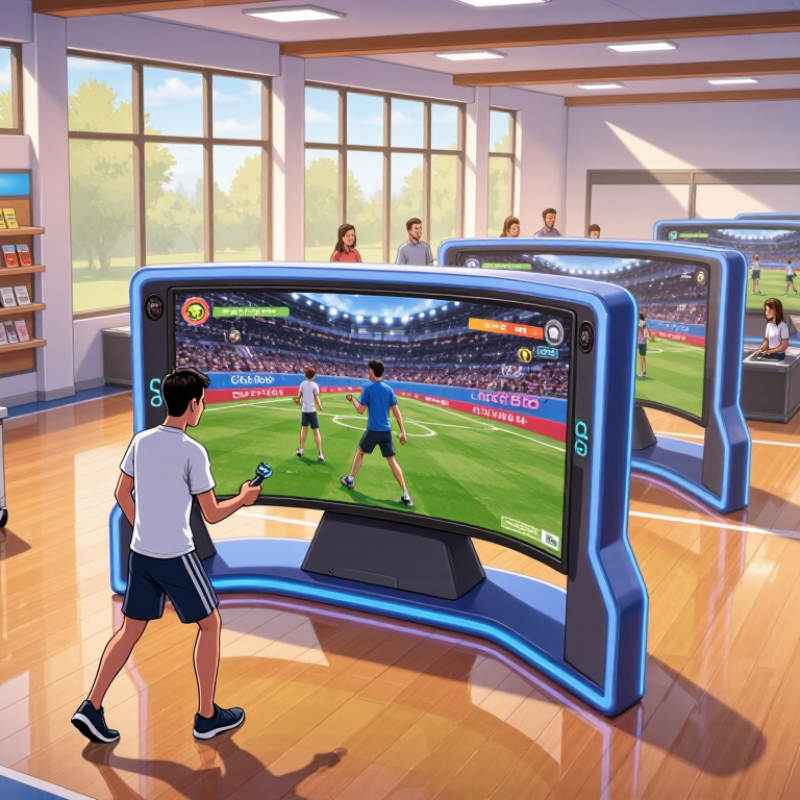
How to Source Interactive Sport Games in 2026?
Compare Proposals, Costs, Licensing, and Support Terms
When sourcing interactive sport games in 2026, compare proposals line by line, not by headline price. Ask each supplier for a playable demonstration and a written delivery schedule. Test motion response, scoring accuracy, screen readability, and recovery after a network failure. Small delays feel obvious during a busy event. They can also expose weak engineering. Record who attends the demonstration and which features actually work. A polished pitch is not proof of stable performance.
Separate one-time development fees from hosting, updates, equipment, integration, training, and support charges. Request a three-year cost model with taxes, renewal increases, and replacement parts shown clearly. The cheapest proposal may hide expensive change requests. That happens often. Compare payment milestones against measurable acceptance tests. Define what counts as a failed test, who fixes it, and how quickly. Keep a contingency budget, but question every vague allowance. My review habit is simple: if a cost cannot be explained, it cannot be approved yet.
Licensing deserves equal attention. Confirm game rights, music permissions, venue territories, content restrictions, and commercial usage periods. Specify ownership of custom code, player data, analytics, and created artwork. Check privacy, accessibility, and local compliance duties before signing. Support terms should state response times, remote access rules, onsite rates, spare-device arrangements, and escalation contacts. A promise of “ongoing support” is too soft. Require service reports and renewal options in writing. Some proposals still overlook offline operation, which may matter when venue connectivity fails. Leave room to revise the plan after a pilot; early assumptions are often wrong.
Anonymous procurement benchmarks comparing implementation cost, licensing, support retainers, and first-response commitments.
Usually uses a non-exclusive, renewable license with the lowest integration cost and a 4-hour first-response target.
Typically includes branding rights within defined territories, annual minimum commitments, and a 2-hour first-response target.
Provides greater product control and possible IP transfer, but requires the highest upfront budget and usually an 8-hour first-response target.
Planning figures are anonymous market benchmarks in USD for a first-year sourcing decision, not vendor quotations. Confirm exclusivity, renewal increases, usage limits, SLA credits, and IP ownership during negotiations.
Testing should happen before any contract discussion. Ask the provider for a working demonstration, not polished screenshots. Run the game on the devices your audience will actually use. Check loading time, control accuracy, sound levels, and performance during crowded sessions. Test with beginners, experienced players, and users with accessibility needs. Real feedback often reveals problems that technical documents miss.
Record every result in a simple evaluation sheet. Measure setup time, repeat-play value, support response, and content update frequency. Also check how user data is collected, stored, and deleted. A reliable solution should explain these practices clearly and provide suitable security controls. Do not trust attractive claims alone. Evidence matters more.
The contract should define licensing rights, service availability, maintenance duties, payment stages, and exit conditions. Include service targets for outages and delayed support. Clarify who owns custom content, player statistics, and operational reports. Make the acceptance process specific, with deadlines and correction periods. After launch, appoint one manager to review weekly performance and monthly costs. Keep a change log. Small updates can create unexpected issues. My own mistake was treating training as a launch task; staff needed practice earlier. A second test would have prevented confusion during the first public session.