Top 10 Wireless Intercom Systems for Home and Office Communication
The advancement of technology has transformed communication within homes and offices, with wireless intercom systems emerging as a vital solution for seamless interaction. According to a recent market analysis by Research and Markets, the global intercom systems market is anticipated to grow significantly, driven by the increasing need for efficient and secure communication tools in residential and commercial environments. Wireless intercom systems have gained popularity due to their flexibility, ease of installation, and the ability to reduce clutter associated with traditional wired systems.
Moreover, the shift towards smart homes and IoT-enabled devices has further propelled the adoption of wireless intercom technology. Statistics from Grand View Research indicate that the penetration of wireless intercom systems in homes is projected to reach substantial figures in the coming years, reflecting a broader trend towards modern communication solutions that prioritize convenience and user experience. By integrating features such as video streaming, mobile app connectivity, and enhanced audio clarity, these systems not only improve daily communication but also contribute to the overall security of homes and offices, making them a worthy investment in today's fast-paced world.

Overview of Wireless Intercom Systems
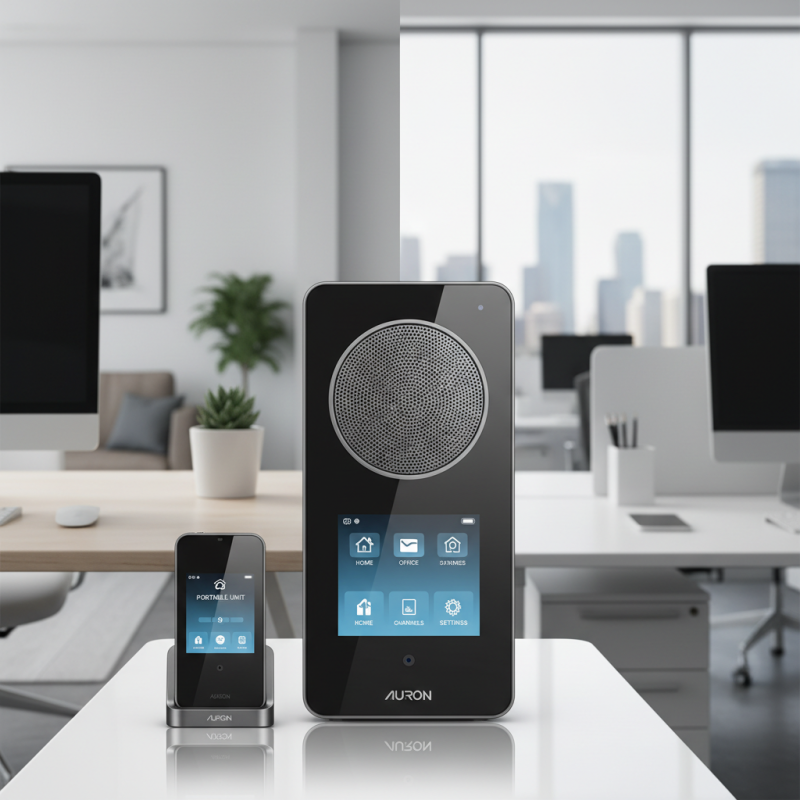
Wireless intercom systems have revolutionized communication for both home and office environments, providing a convenient and efficient way to connect without the need for a physical wired connection. These systems utilize radio waves or Wi-Fi technology, allowing users to communicate effortlessly across distances that might be impractical with traditional intercoms. The primary advantage is the simplicity of installation; most wireless units require minimal setup, making them suitable for properties where running cables is not feasible.
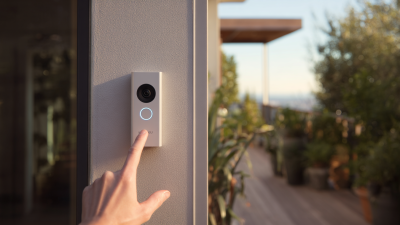
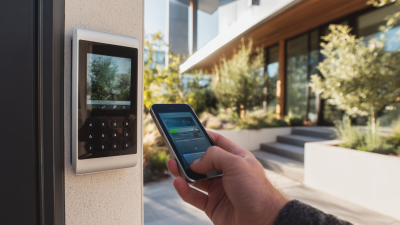
In addition to ease of use, modern wireless intercom systems often integrate advanced features such as video capabilities, mobile app controls, and even interconnectivity with smart home devices. This functionality not only enhances communication but also improves security and monitoring within a property. Users can receive notifications, view live video feeds, and communicate directly with visitors at the door, all from the comfort of their mobile devices. With various models available, individuals can choose systems tailored to their specific needs, whether for everyday interoffice communication or for securing a residential property.
Top 10 Wireless Intercom Systems - Communication Range Comparison
Benefits of Using Wireless Intercoms in Homes and Offices
Wireless intercom systems have become an essential communication tool in both homes and offices, offering numerous benefits that enhance connectivity and convenience. One of the primary advantages of using wireless intercoms is their ease of installation. Unlike traditional wired systems, wireless intercoms eliminate the need for extensive cabling, allowing for a quick setup and flexibility in placement. This is particularly beneficial in larger homes or office spaces where running wires can be cumbersome and expensive. As a result, users can effortlessly communicate across different rooms or areas without the hassle of infrastructure changes.
Another significant benefit of wireless intercom systems is their ability to facilitate seamless communication in everyday situations. In homes, these systems can help family members stay connected, whether it's for quick updates or coordinating schedules. In office environments, wireless intercoms can enhance collaboration among team members, ensuring that important information is shared without delays. Furthermore, many modern intercom systems come equipped with additional features, such as video capabilities, which can significantly improve security and monitoring. With these advantages, wireless intercoms not only streamline interactions but also foster a more efficient and connected living or working space.
Key Features to Consider When Choosing an Intercom System
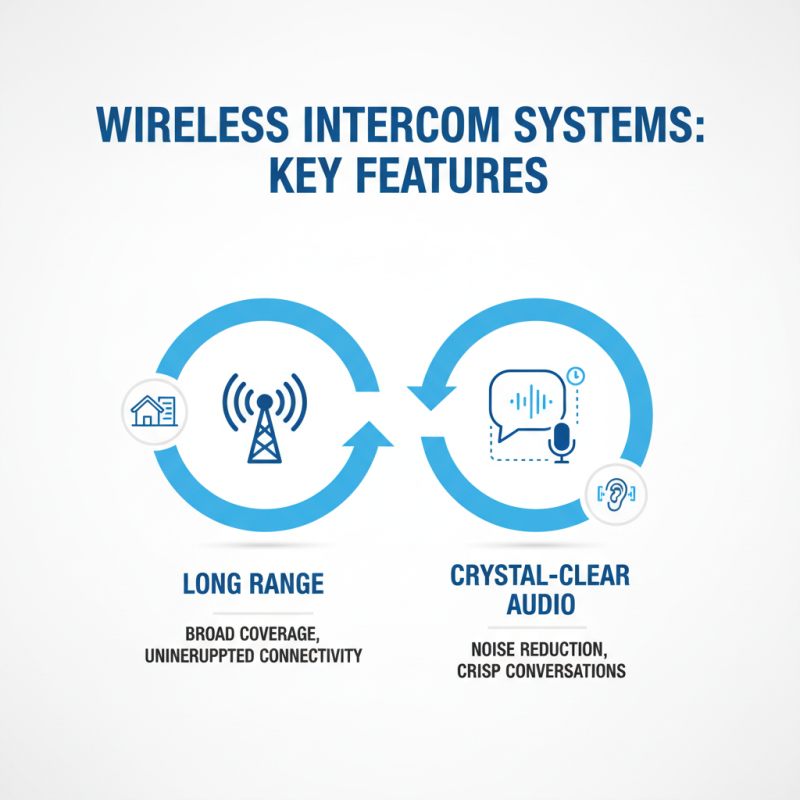
When selecting a wireless intercom system for both home and office use, several key features should be on your radar to ensure seamless communication. First and foremost, range is crucial. According to industry reports, many users require a system that can operate effectively across distances of up to 500 feet or more, especially in larger properties or multi-story buildings. A unit that offers a robust signal strength can significantly enhance user experience by minimizing dead zones where communication may falter.
Another important consideration is the audio quality. Clear audio transmission is fundamental for effective communication, as poor sound quality can lead to misunderstandings. Data from market research indicates that systems with noise-cancellation technology and high-definition audio capabilities are becoming increasingly popular due to their ability to filter out background noise, making conversations more intelligible in busy environments. Lastly, ease of installation and user-friendly interfaces are essential aspects that can affect the adoption of intercom systems in both residential and corporate settings. A study noted that around 70% of consumers prefer devices that can be set up without professional assistance, indicating a strong market demand for plug-and-play solutions.
Top 10 Wireless Intercom Systems for Home and Office Communication
Wireless intercom systems have become increasingly popular for both home and office communication, primarily due to their convenience and efficiency. According to a recent industry report by MarketsandMarkets, the intercom systems market is projected to grow from USD 1.7 billion in 2020 to USD 3.2 billion by 2025, reflecting a compound annual growth rate (CAGR) of 13.5%. This surge in demand is driven by the need for efficient communication solutions that can enhance security and facilitate easier interaction in various environments.
In home settings, wireless intercom systems allow families to communicate easily across different rooms without the need for mobile devices, fostering seamless interaction. These systems often feature simple installation processes and the ability to connect multiple devices, which is particularly appealing for households looking for user-friendly communication methods. In corporate offices, these intercom systems provide a reliable and effective means for team members to communicate without interrupting workflows, thereby enhancing productivity. The flexibility of wireless intercoms also aligns well with the increasing trend of remote workplaces, enabling instant communication regardless of the physical location of employees.
Comparative Analysis of Popular Wireless Intercom Brands
When comparing popular wireless intercom systems, a few key features emerge that set certain brands apart. First, the range of communication is crucial for both home and office use. Systems that offer a longer range tend to provide better connectivity across large spaces, allowing for seamless communication without interruptions. Furthermore, voice clarity and audio quality are significant factors that enhance user experience; systems that utilize advanced audio technology often deliver crisper sound, minimizing background noise and ensuring that conversations can be held clearly even in busy environments.
Another important aspect to consider is the ease of installation and operation. Many users prefer intercoms that can be set up quickly without requiring extensive technical knowledge. Intuitive interfaces that allow for quick adjustments and user-friendly controls can significantly improve daily functionality. Security features also play a vital role in the decision-making process, as some models include options for encrypted communication, which is particularly appealing for users concerned about privacy in both residential and corporate settings.