Why Choose an Interactive Game Wall for Your Business?
A modern business competes for attention in busy, often crowded spaces. A café may have a quiet corner. A retail store may have a window display that visitors pass without noticing. An Interactive Game Wall can give people a clear reason to pause, participate, and explore the space. On a large screen, a simple motion-controlled game can turn a few spare minutes into an engaging shared moment. No complicated instructions are needed. That matters when families, groups, and first-time visitors are all welcome.
For businesses, the value depends on fit, not novelty alone. A game can reflect a brand, highlight a product, or support an event, while giving staff an approachable way to start conversations. It may also encourage visitors to stay longer, though results vary by location, audience, and the quality of the experience. Track practical signs: participation, repeat visits, staff feedback, and whether the activity interrupts normal operations. Keep the interface clear, the play area comfortable, and the content suitable for your audience. Small details count.
An Interactive Game Wall is not a magic fix. It needs thoughtful placement, regular maintenance, and a reason to be there beyond looking impressive. That part is easy to overlook. A modest, well-tested game may serve customers better than an elaborate installation that feels confusing. Start with your business goals, consider how people actually move through the space, and choose an experience that invites play without demanding it.
What an Interactive Game Wall Is and How Its Sensors and Software Work
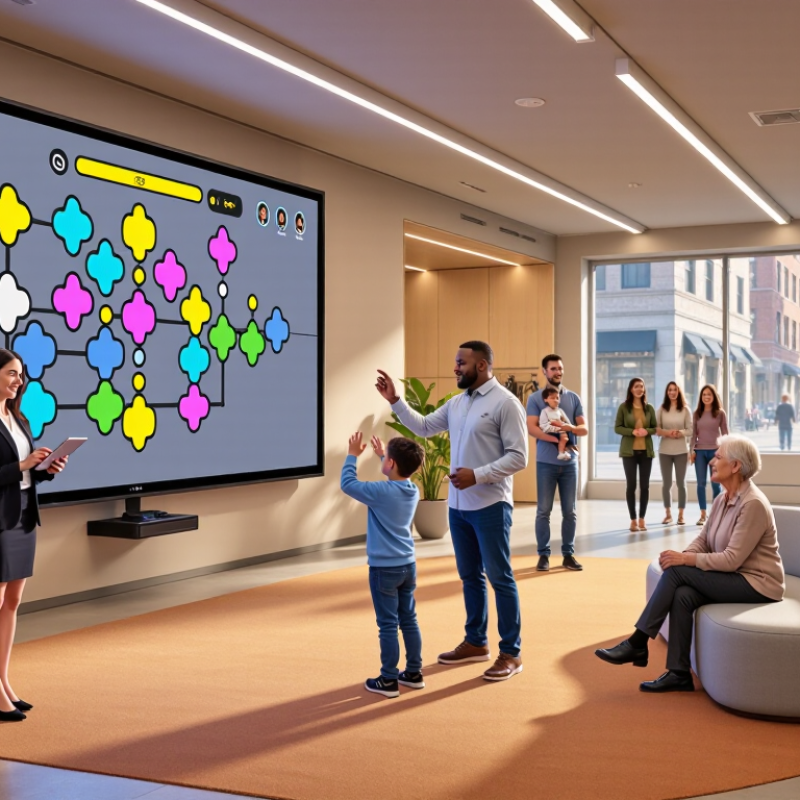
An interactive game wall turns a large screen or projected surface into a play area. Sensors detect movement, and software translates it into on-screen actions. A visitor might swipe to move a ball or step sideways to dodge an obstacle. No controllers required. Newzoo’s 2024 Global Games Market Report estimated 3.4 billion players worldwide and $187.7 billion in game revenue. That scale suggests digital play is familiar, but it does not mean every visitor will participate.
A depth camera or infrared sensor can estimate where people are and how they move. The software tracks those positions, then maps them to game rules, graphics, and sound. For example, stepping into a marked zone might trigger a light trail across the wall. Calibration helps the system distinguish a player from shadows or nearby movement. Small delays matter. Even a brief lag can make a simple interaction feel awkward.
For a business, the setup should match the room: ceiling height, lighting, floor space, and expected visitor flow all affect performance. A bright window may confuse some camera-based systems; crowded scenes can also make tracking less reliable. Test with children and adults, not just staff. The first version may need adjustment. That is normal, though easy to overlook when a demo runs in an empty room. Newzoo’s figures describe gaming broadly, not game-wall adoption, so treat them as context rather than a promise of customer engagement.
Audience Fit: ESA Reports 190.6 Million U.S. Weekly Video Game Players
An interactive game wall can meet visitors where they already are: playing games is a familiar activity for a remarkably large audience. The Entertainment Software Association’s 2024 Essential Facts report estimates that 190.6 million people in the United States play video games weekly. It also reports that 61% of U.S. adults play weekly. That reach matters for businesses serving mixed-age crowds, from families in a recreation center to adults waiting in a venue lobby. The numbers do not guarantee that every visitor will stop and play. Still, they suggest the format is not limited to a narrow niche.
The experience should feel easy to join. Picture a bright floor projection, a ball rolling across it, and a passerby discovering that a step changes the game. Clear instructions and short rounds can help people participate without a lengthy explanation or a sign-up. Keep the play area visible, leave room for mobility aids and strollers, and offer a quieter route around it. Small details matter. ESA’s figures describe players, not your specific customers, so test the wall with real visitors before committing to a permanent layout. Some will walk past. That is useful feedback, too.
Engagement Design: Deloitte Finds 83% of Gen Z Play Video Games
An interactive game wall can turn a blank lobby wall into a reason to pause. Deloitte’s 2024 Digital Media Trends survey found that 83% of Gen Z respondents play video games. That is a strong design signal, not a guarantee that every young visitor wants to compete in public. A wall that responds to a quick swipe, timed tap, or shared score can make waiting feel active. Picture a visitor testing a reflex game while a friend watches nearby. Small moments like that can invite conversation. Still, some people would rather watch than play. Worth remembering.
The Entertainment Software Association’s 2024 Essential Facts report estimated that 190.6 million Americans play video games for at least one hour each week. That broader audience suggests game-based interaction is familiar to many visitors, not just teens. For a business, track simple measures: plays, repeat visits, and average session time. Compare those figures before and after installation, while noting changes in foot traffic. Neither report measures the impact of game walls specifically. So treat the statistics as context, not a promised return. A noisy game, unclear instructions, or a screen that is hard to reach can put people off. Test the setup with real visitors, then adjust.
Why Choose an Interactive Game Wall for Your Business?
Gaming is already part of everyday life for many young people.
83% of Gen Z play video games, highlighting the potential of interactive experiences to capture attention and encourage participation. Source: Deloitte Digital Media Trends.
Business Value: Track Dwell Time, Repeat Play, Leads, and Conversions
An interactive game wall gives visitors a reason to stop, but its business value is clearer when play can be measured. Dwell time shows how long people stay near the experience. Repeat play reveals whether a game holds attention beyond a first try. A simple session log can help staff compare busy hours, quieter periods, and different game formats.
Look for patterns, not just totals. If visitors spend longer at the wall but rarely return, the game may be engaging yet too difficult to replay. If repeat play rises, check whether nearby displays or promotions also receive more attention. Numbers need context. Track leads and conversions with a clear method, such as recording voluntary sign-ups or noting which visitors redeem a specific offer. Avoid treating every interaction as a sale.
A weekly review can make the data useful. Compare play sessions with inquiries, coupon use, or bookings over the same period, while accounting for foot traffic. Results may be uneven. That is still useful. A short test can reveal whether changing the instructions, game length, or call to action improves response. Keep the setup easy for staff to manage, and make sure visitors understand what information is collected and why.
Deployment Factors: Space, Accessibility, Safety, Content, and ROI
Why Choose an Interactive Game Wall for Your Business?
An interactive game wall can turn an unused wall into a reason to pause, play, and return. But deployment starts with the room, not the screen. Measure clear floor space, player reach, viewing distance, and queue spillover during busy periods. Leave enough room for a wheelchair user to approach and turn. Small details matter. The CDC’s 2024 report found that 28.7% of U.S. adults had a disability, making accessible controls and clear instructions practical design requirements, not extras. That figure deserves attention.
Safety needs a site check. Secure the display and sensors, cover or route cables, and keep play areas away from doorways and sharp corners. Choose surfaces that can be cleaned easily, and decide who checks the equipment each day. This can feel like overplanning, but a loose cable is not a minor detail. Content also needs to fit the audience, visit length, and noise level; a game that blocks conversation may frustrate nearby customers.
For ROI, track plays, repeat sessions, dwell time, and any linked sales before and after installation. EventTrack 2024 reported that 85% of consumers were more likely to purchase after a live brand experience. That is useful context, not a guaranteed return for every venue. Run a small pilot, compare results with installation and maintenance costs, then revise the content. Some visitors may simply watch and leave; that still tells you something.